
We have moved this content to EquinePlusFeed.com
Our Hi-Pro Feed has been renamed Equine Plus® Feed. The ingredients and manufacturing process are the same, only the name has changed.

The science of equine gut health focuses on how the digestive system, microbiome, and hindgut fermentation work together to produce energy, maintain stability, and support overall health. Understanding these systems provides the foundation for interpreting digestive symptoms, improving feed efficiency, and supporting performance.
Gut health is not a vague wellness concept. In horses, it is a biological system built around microbial fermentation, fiber digestion, fluid balance, and nutrient utilization.
For the broader foundation, begin with equine gut health. This science page explains the mechanisms behind that system.
Many aspects of horse health, from digestion to performance, are rooted in how the digestive system functions at a biological level. While symptoms such as loose manure or poor feed efficiency are visible, the underlying causes are often driven by processes within the hindgut and microbial ecosystem.
Understanding these processes provides a framework for interpreting digestive changes, improving feeding strategies, and supporting long-term health and performance.
Horses are hindgut fermenters, meaning they rely heavily on microbial fermentation in the cecum and colon to digest fiber. Unlike ruminants, which ferment feed before enzymatic digestion, horses ferment fiber after it passes through the stomach and small intestine.
This system allows horses to process large amounts of forage, but it also makes microbial balance in the hindgut critical for efficient digestion and energy production.
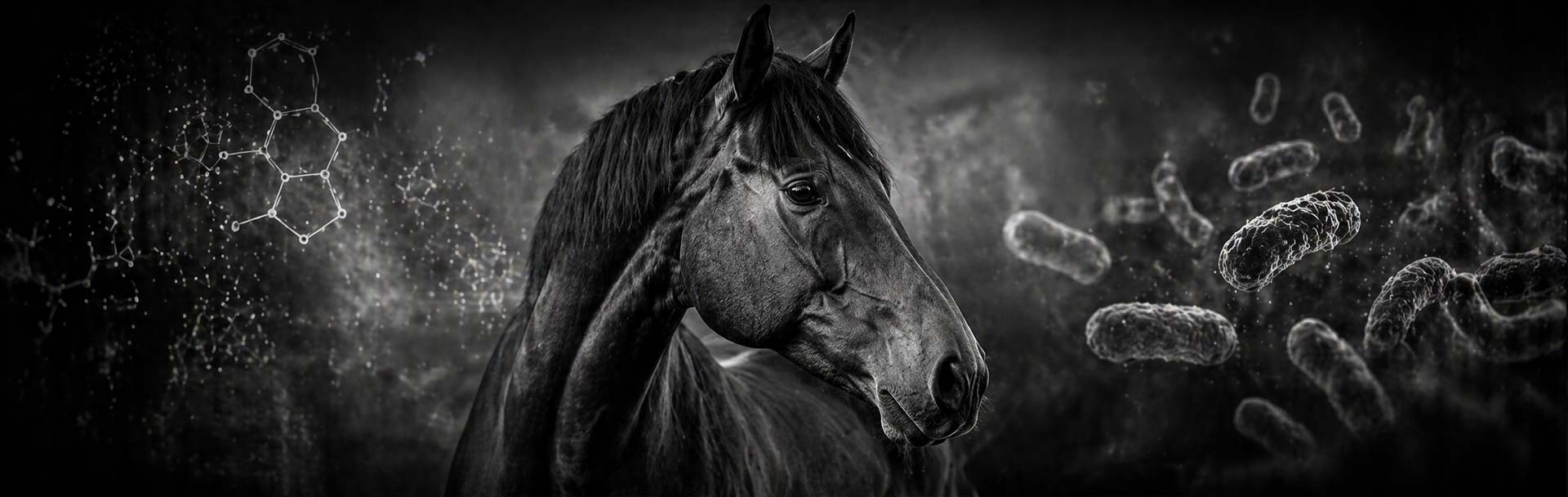
The equine microbiome consists of bacteria, fungi, and other microorganisms that live within the digestive tract. These microbes break down fiber, support nutrient utilization, and maintain digestive stability.
At the center of this system are gut bacteria in horses, which regulate microbial balance and fermentation efficiency.
When microbial balance is disrupted, digestion becomes less consistent, affecting manure quality, feed efficiency, and overall gut stability.
Hindgut fermentation is the process by which microbes break down fibrous plant material into volatile fatty acids. These compounds are absorbed through the intestinal wall and serve as a primary energy source for the horse.
This process makes fiber not only a structural component of the diet, but also a major contributor to energy production. Efficient fermentation is essential for maintaining condition, stamina, and performance.
A stable digestive system depends on a balanced microbial environment. Different groups of microbes specialize in breaking down different nutrients, and their populations must remain in equilibrium.
When this balance is maintained, digestion is consistent and efficient. When disrupted, fermentation patterns shift, leading to changes in digestion, manure consistency, and nutrient utilization.
These factors influence how stable the microbial ecosystem remains and how efficiently digestion functions. Hydration and fluid balance are explored further in gut health and electrolytes in horses.
Digestive symptoms such as loose manure, diarrhea, gas, bloating, or poor feed efficiency are outward signs of changes in microbial balance or fermentation patterns.
By understanding the underlying biology, it becomes easier to interpret digestive symptoms in horses and identify the factors contributing to instability.
The same processes that drive digestion also influence performance. Energy production, hydration balance, and recovery all depend on how effectively the digestive system is functioning.
When gut health is stable, energy availability is more consistent, supporting stamina and recovery. When disrupted, performance becomes less predictable.
This relationship is explained in more detail in gut health and performance in horses.
Probiotics are used to support microbial balance in the digestive system. They may be introduced during periods of stress, feed changes, or digestive instability to help maintain a stable microbial environment.
However, probiotics are only one part of the system. Their effectiveness depends on the broader context of diet, feeding practices, hydration, and overall management.
Learn more about when to use probiotics for horses and how they fit into a complete gut health strategy.
Use the guides below to explore the key systems that drive digestive health:
The equine microbiome is the community of microorganisms that live in the horse’s digestive tract and support digestion, fermentation, and microbial balance.
Hindgut fermentation converts fiber into volatile fatty acids, which provide a major source of usable energy for the horse.
Diet, feeding consistency, stress, hydration, travel, workload, and management practices all influence gut bacteria and microbial balance.
Gut health influences energy production, hydration, feed efficiency, and recovery, all of which affect performance.
Probiotics may support microbial balance during stress, feed changes, travel, or digestive instability as part of a broader strategy.